
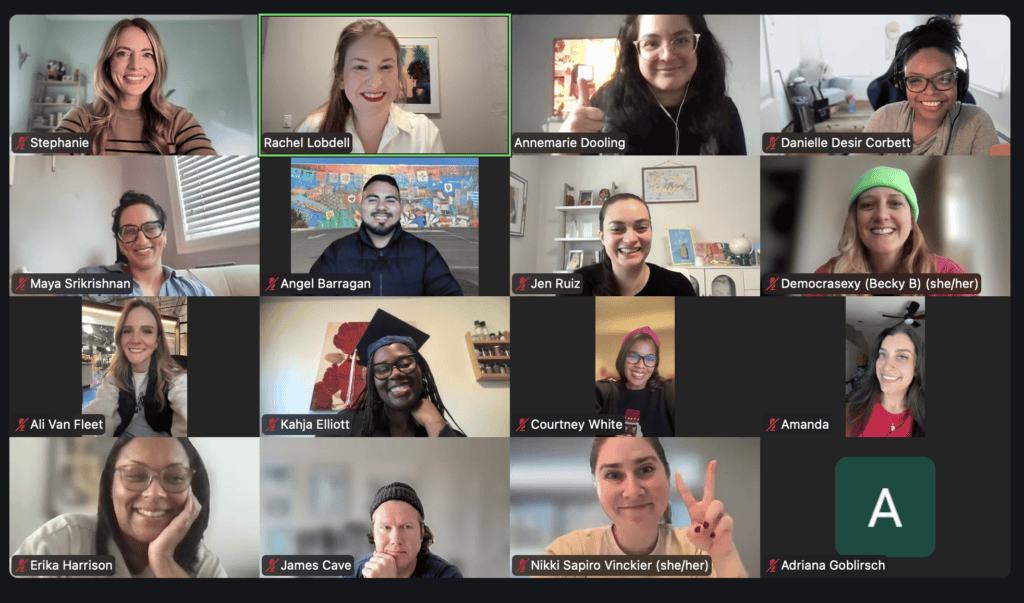
The first cohort of the News Creator Corps Trusted Creator Program is long over, and we’re about to welcome new creators to class. In this time between preparing documents and meeting with our trainers, I’m also taking a moment to go back over the notes I made during the fall session, all nine pages of them.
That might seem like a lot of notes, but during each class, whether in the preparation stage or when going over homework, something would undoubtedly come up that I was not prepared for, whether that was a technical error that prevented knowledge from getting into the cohort’s hands or identifying that a topic could have been a full class halfway through the semester.
Experimentation is built into the core of NCC, and I’m using those notes and discoveries from last year to help drive an even better experience for our creators in 2026.
Here are five key learnings from the inaugural Trusted Creators fellowship:
- Creators need a tech stack. Even though they aren’t newsrooms, creators need a suite of tools at their fingertips to make content, find and report data, make a portfolio, host a website, save video drafts, edit video, edit music, run events and more. That’s a lot of individual accounts and subscriptions and thinking about those individual tools as a stack that can work together to source, create and document makes the job easier when you’re a one-man band.
- Discussion is more important than training. This one is not just for creators—I’ve noticed this same behavior when managing live journalism events, both for Zoom and in-person events. While the training agenda is the skeleton of the event, most of the discovery and learning comes from the period when people can ask questions, respond to others and share half-baked thoughts. Seeing that, I’ve changed my classes to feature ample time for structured open discussion.
- Collaboration is key. While we’re teaching skills that even some journalists haven’t been formally trained on, the top benefit of a NCC cohort is the constant communication across the group. That includes trainers, moderators, and creators talking through problems, sharing what they notice, and working together on content. From a tactical standpoint, tagging and sharing each other’s work can help grow impressions and followers. From a learning perspective, watching others work can open doors for experimenting with your own format. It’s why I try not to turn down a creator’s event, knowing I’ll meet people who will want to share and work together.
- Survey and change, then do it again. Even with the best trainer, the most talked-about topic, and a full class of folks excited to learn, it might not be as exciting live as you’d hope. A mid-program survey helped me identify that a class I was ready to axe was actually a favorite, even with low vocal participation. The survey was so helpful in understanding which trainers made an impact and what topics encouraged more thoughtful content creation, so I’m going to survey twice this year. It’ll be shorter and more to-the-point to help me make fast changes.
- The consternation between journalists and creators is largely imagined. While the rumor mill asserts that journalists are terrified creators are coming for their jobs, most creators have no ambitions to be the north star of truth. They identify a topic, they compile several sources on it, and they communicate it. With NCC, they are learning reporting skills to better identify truthful news, but most of our creators have voiced great respect for journalists and a desire to keep receiving fact-based content from them—not replace them. If news organizations attempt to replace audience development editors with creators to increase views based on the reach of the creator, it’s a short-term gain that doesn’t have big payoff for anyone involved, and least of all the audience.