
When we talk about misinformation, it’s tempting to think it only happens to “other people.” However, social science reveals that we are all vulnerable to believing false or misleading information. A big part of that vulnerability comes from how our identities shape the way we process information.
Identity biases and why they matter
Our identities, whether political, religious, cultural, or even as simple as being a sports fan,. act as filters for how we interpret the world. In my book “Misguided,” I explore research showing that we’re motivated to believe stories that affirm our groups and to dismiss those that challenge them. For example, we might think a referee’s call against our favorite sports team was inaccurate because of our motivation to support our team. This tendency, which I call identity bias, doesn’t just shape our opinions. It can also make us more likely to accept misinformation that flatters our group and more resistant to facts that threaten it. Because we derive self-esteem, meaning, and connection from our identities, we’re strongly motivated to protect them. This isn’t usually a problem when it comes to things like cheering for a favorite sports team, but it can become a real issue when our identities lead us to interpret facts in a biased way.
Of course, identities don’t exist in isolation; we all carry multiple, intersecting ones. Ideally, we would draw self-esteem from a broad range of identities. However, when our core identities share a narrow set of meanings, they reinforce one another, making our overall sense of self more dependent on defending that limited viewpoint. An extreme example would be someone who only has three major identities: their political identity, religious identity, and friendship identity. Not only do they just have three main identities, but their religion and politics completely overlap, and all their friends share those same beliefs. It doesn’t matter what their ideology is; the close overlap between these identities creates a powerful reinforcement effect. In this example, any challenging information to the narrow set of meanings associated with these identities can feel like an attack on their entire sense of self. When that happens, we often become more defensive and more susceptible to misinformation that reassures or validates our group. I call the ability to recognize how our identities influence our judgment “social identity literacy.” Building on that idea, I introduce a related concept: “personal network literacy”—the ability to recognize how our social connections shape the flow of information we encounter.
The role of networks
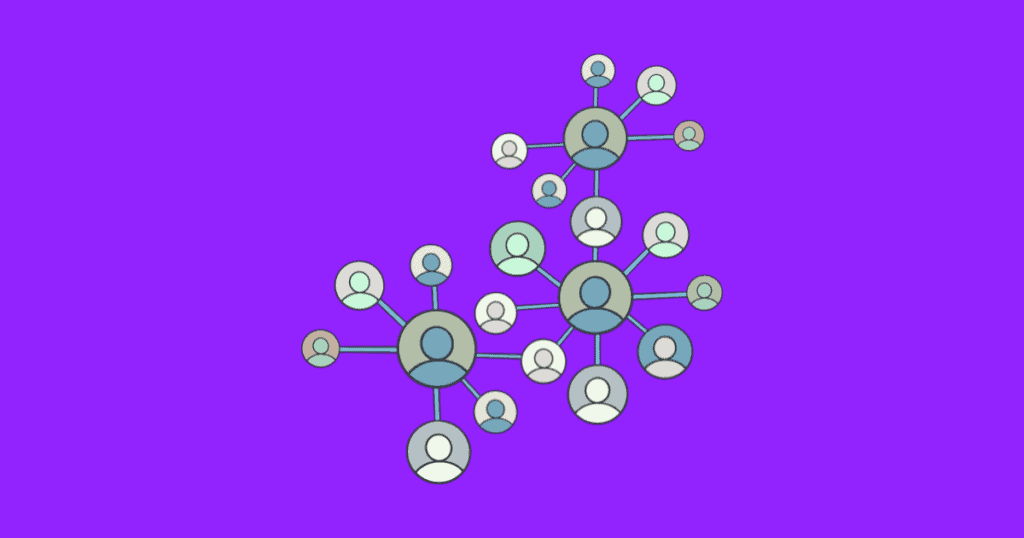
If identity biases are the fuel, our networks can be an additional spark to potential bias. Who we follow and engage with, both online and offline, shapes what information we see and how credible it feels.
My research shows that surrounding yourself with more people who share your beliefs increases the likelihood of bias. But even a single person in your network who thinks differently can significantly reduce that bias. The opposite is also true: when people feel excluded or isolated, they often retreat deeper into like-minded spaces, which reinforces their existing views.
Social media accelerates this process. It’s easy to find like-minded accounts, and algorithms will happily feed you more of the same. Over time, this creates a reinforcement loop, where identities are constantly affirmed, and opposing perspectives are filtered out.
Why network literacy matters
This is why I emphasize what I call personal network literacy: the ability to reflect on how your social connections shape what you see, believe and share. Network literacy means recognizing that your feed is not a neutral window on the world. It’s filtered by algorithms, curated by your choices and influenced by the identities you most value.
The same principle applies offline. If your close circles never challenge your views, it becomes harder to evaluate information critically. But building relationships that cross identity boundaries increases your exposure to diverse perspectives and reduces your vulnerability to one-sided narratives.
Practical steps forward
So how do we boost our network literacy?
- Audit your follows. Review your social media feeds. Do they reflect only one worldview or are they balanced with credible, diverse sources?
- Be mindful of algorithms. Platforms are designed to keep you engaged, often by feeding you more of what you already believe. Awareness is the first step in resisting that pull. Avoid trolls who thrive on polarization and set limits for your most-used apps.
- Nurture diverse offline connections. Join communities, clubs or professional groups where different identities overlap. These ties can broaden your perspective and provide reality checks.
- Pause before sharing. Ask yourself: am I endorsing this because it’s accurate or because it aligns with my identity?
Misinformation spreads most easily when identity biases and homogenous networks reinforce each other. By being more intentional about who we follow and how we connect, we can build stronger defenses, not just for ourselves, but for the communities we influence.