
Given the changes to TikTok, a lot of creators are wondering if there’s a future there, and are considering diversifying their distribution methods. It’s a stark reality of our Internet that the platforms we use to connect with people can simply disappear in a moment’s notice.
And the information system landscape is changing rapidly: AI search is highlighting forum discussions and websites that could never compete in search engine optimization, chat apps are replacing open discussion with untraceable chats, and newsletters are now big business.
Newsletters can be easy to get off the ground, and they are well-suited to creators who like to talk for long periods, break down complex issues, own their own stories and show multiple visuals. So, is a newsletter for you? Let’s talk about it.
What’s great about newsletters? They are a nearly surefire way to have direct conversation with your community. Because they are sent to each person individually – and most get through email filters – you can place bets around your information landing in your audiences inbox.
If you’re curious about newsletters, you can start with a simple experiment: find a low- or no-cost tool that allows you to build out your newsletter, customize a simple template of the email, and manage your list of readers, all in one. You’ve heard of SubStack, but Mailchimp, Ghost and Beehiiv all have similar features.
Share a link to the signup prompt on your most engaged platform. This is a way to gauge how easy it will be to convert visual audiences to a different, more personal medium.
With a newsletter, you own the email addresses of your readers. You can take that to other newsletter tools if you don’t like one, you have flexibility in how often you communicate, and when. Even if your newsletter lands in a secondary inbox, rather than Gmail’s primary, it’s still likely to be read by an audience member who recognises your name.
What does this look like if you’re a short-form video creator? You’ll want to think about adapting your scripts to be read in longer form. You can add more details to areas you may have previously rushed through to hit required video lengths. You can add side notes and links to back up your work. You can even embed sources.
Since writing can strike a different tone than voice, try your best not to edit your personality out of your text just because it’s in written format. That includes long- and short-form content, since you can make your newsletter whatever length fits your needs.
Steps to starting your newsletter experiment
- If you’ve never asked for audience email addresses before, you’re going to have to try to convert your social followers to a more personal communication method. Not everyone is comfortable providing that information because of decades of spam that have given us trust issues.
- Start by being transparent and telling your community that you’re trying a new format and you’d like to connect with them. Many email platforms allow you to send a verification email post-signup that welcomes the reader, and this is a great place to remind them who you are, your work and your mission, and other ways to be in touch with you.
- Once you have a list, you might need to be aware of laws like GDPR or CANSPAM, which are laws that require you to clean out your list and remove any information for readers if they ask you to do so, aka list hygiene. List hygiene is a good way to understand your audience in general: you can send re-engagement emails to “zombies,” or readers who haven’t opened in over 3 months, and ask if they still want to be on your list. High send numbers (the amount of inboxes your newsletter touches) aren’t good if you have low opens or reactions. A low number of opens can impact what folder your newsletter ends up in, and you can’t always guarantee that an email won’t end up in SPAM if a high number of readers don’t engage with it, too.
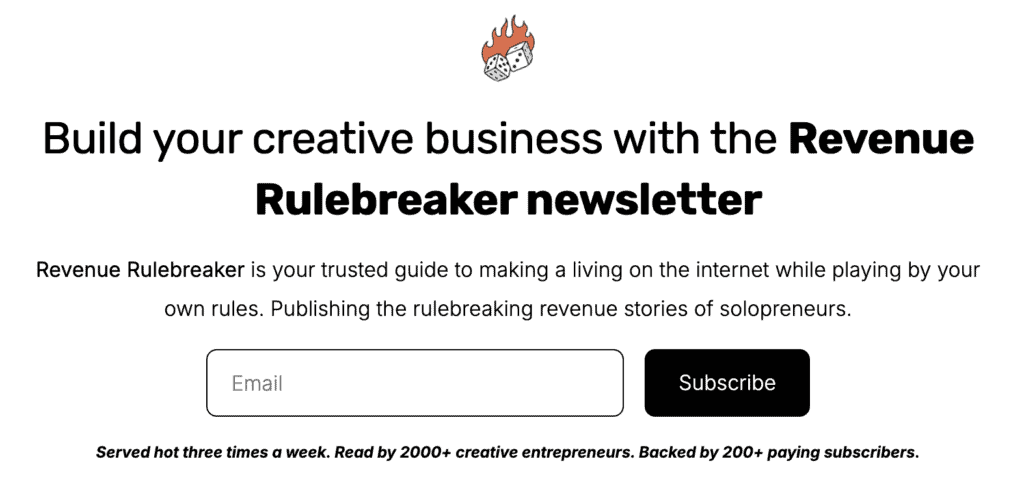
- Before you begin, you’ll need a domain or website to host a clear signup prompt. You’ll want to express what readers will get, with an example if possible, how often you are likely to send, and clear information on how to unsubscribe.
- You’ll need a content management system – or CMS – that allows you to craft the kind of newsletters you want. For visual creators, it can be tempting to simply place an embed into a newsletter to have your videos go directly to your audience. If that’s you, you’ll want to understand what the embed situation looks like, and how easy it is for the audience to arrive at the video. But remember that this is a different medium with a different audience and it’s a great time to experiment with text.
- Email engagement is very different, as well. Emails tend to live longer than social media, because they aren’t presented in an ever-rotating feed of competing content. They sit in your inbox even after you open them. There’s no creation time limits, or reading time limits. This means someone can save and reply to your email months later and you still have a chance to build that relationship.
- Placing a link, question or some other prompt that encourages your audience to take a real action can help with alerting email programs that your work is valuable and belongs in their inboxes, so use your video engagement skills to prompt your audience to react.
- Knowing that, what would you put in your newsletter template? A signup button if it’s shared? A short bio? A link to more of your work? Think about the journeys you’d take your audience on if you knew they had more time with you.
And if this is all new to you, take your time. There’s no need to rush sending that first newsletter; wait and build your list up. Take breaks, be intentional. While a constant and repetitive stream of content via email can keep audiences engaged, don’t overwhelm yourself with a new medium. And remember, you can quit at any time: you’re under no obligation to continue sending emails if it’s not for you.
Have more questions? Reach out and let’s talk it through!