
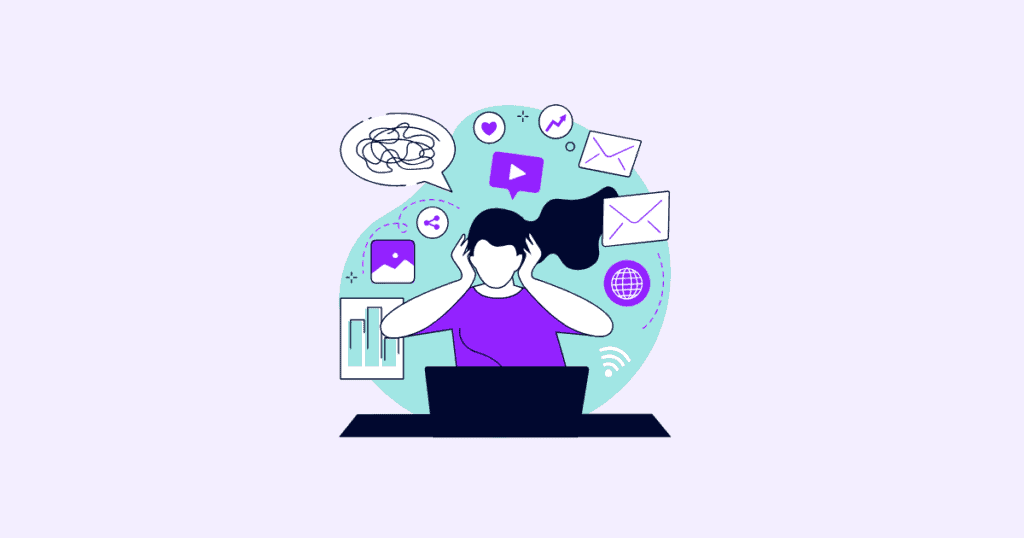
Over the past year, we’ve held events and workshops with creators about storytelling and mental health, and this duality keeps coming up. Being a creator is a privilege: the community, the creativity, the chance to make something that actually moves people. It’s also relentless. The work and notifications don’t clock out. That push and pull appears over and over again: gratitude on one side, burnout on the other.
The pressure to always be online, keep up with the news cycle, navigate negative comments, and compare yourself to other creators can take a real toll. And when the news is intense or directly impacting your community, it can become even harder to separate your work from your emotional well-being.
A lot of the time, people aren’t looking for you or your content to be perfect. They’re searching for honesty, clarity, connection, and creators who feel human. Often, the content that resonates most is the content that helps people feel understood or a little less alone.
Taking steps to protect yourself from burnout isn’t a career sidestep. It can actually move you toward more authentic storytelling and the kind of connection your audience may need most right now.
What burnout can look like
Burnout can show up as exhaustion, detachment, or feeling disconnected from your “why.” It can start spilling into your personal life, relationships, and sense of self. Sometimes, the line between you and your content starts to blur. That’s why it’s important to remember: You are not your content. You are the creativity, passion, and energy behind that content, and you need to protect that spark.
Taking care of your mental health as a creator isn’t selfish; it’s part of sustaining your creativity, your work, and yourself. And managing burnout isn’t always about doing less. Sometimes it’s about changing how you work, what you choose to work on, or the ways you care for yourself.
What actually helps
Here are a few evidence-based ways to help prevent and navigate burnout and, when you’re ready, show up for audiences that may be feeling overwhelmed too.
- Keep something just for you: Whether it’s going for a walk, trying a grounding exercise, or spending time with people you trust, make space for experiences that are just yours and don’t become content.
- Create healthy boundaries: Authenticity is about bringing your full self, but that doesn’t mean you have to share everything. Before posting something personal, check in with yourself: are you ready, and is this something you want public? Get clear on what’s on-camera and what stays yours, and lean on filters, moderation tools, and privacy settings to keep your online space feeling safer and more manageable.
- Don’t let the internet decide how you feel about yourself: Not every comment deserves your energy, and not every conversation needs your response. Pause before reacting. Step away when needed. Protecting your space is part of protecting yourself.
- Move from hurt to help: Some of the most impactful creator content comes from honestly sharing what you’re learning, what’s helping you cope, or how you’re trying to take care of yourself. That kind of openness can help your audience feel less alone while also modeling what support and recovery can look like.
- Connect with people: Whether it’s a creator friend who understands this work or someone who knows you outside of social media, spending time with people who remind you that you don’t have to carry everything yourself can make a big difference.
You can find more tips, tools, and advice in The Jed Foundation’s Digital Storytelling Guide, a mental health resource created by creators, for creators, and informed by experts. The guide includes additional support for navigating online spaces, protecting your mental health, and showing up thoughtfully for your audience.
If you’re struggling yourself, support is available. Call, text, or chat 988 anytime, or text HOME to 741-741 for a free, confidential conversation with a trained counselor any time of day.