
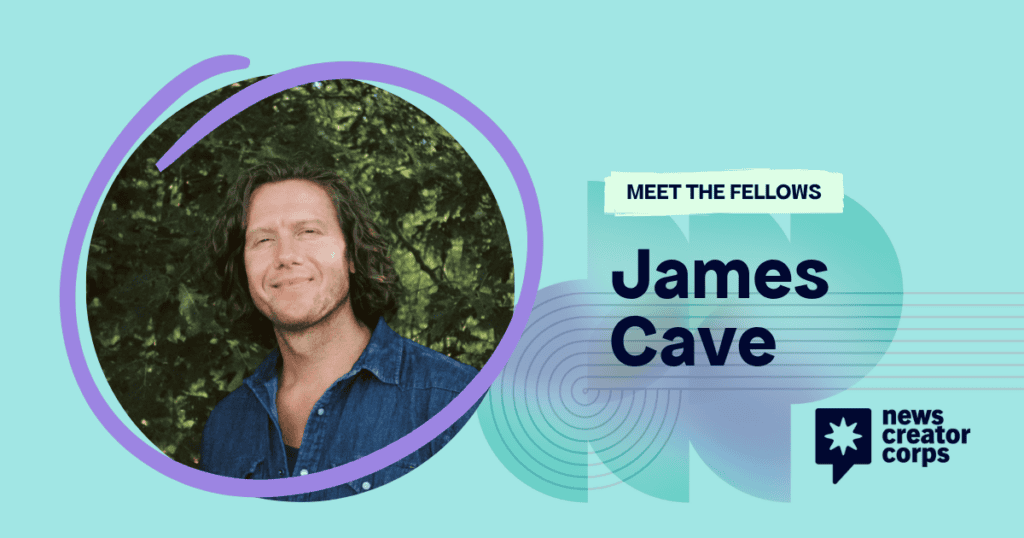
For James Cave, creating documentaries helped him connect with people in the rural community in the Hudson Valley region of New York when he first moved there.
Now, as he explores ideas of belonging, he collaborates with his neighbors to tell their stories versus just telling stories about them.
“It can be lonely as we’re all adults now trying to make friends,” Cave said. “How do we get to know each other? How do we get to know our communities? It just kind of goes to this idea of how do we find a connection to a place especially now in this time of social media and living online.”
Cave’s primary audience is his neighbors. But it’s also the people who grew up in the area – and he still wants the themes of the stories he tells to be relevant to people in places where he’s lived before that continue to follow him.
“It’s trying to find that something that’s special about this place, but relates to a universal theme or a wider United States theme,” he said. “I’m very conscious of the fact that I am a cisgender straight white man. And it’s really important to me to present these stories in a way that’s not me being some sort of arbiter of what you should know or me making connections that is like, ‘This is another white guy telling you the way the world is.’“
Cave leans into slow story telling – something that can feel novel on social media. But he has a background in journalism that began at The Honolulu Weekly, an alt weekly in Honolulu that no longer exists.
“I think there’s a bit of that irreverence that was always inspiring to me in this type of storytelling,” he said. “I don’t consider myself the capital J ‘Journalist’—which I may have done previously in my career—because I’m more collaborative with these folks. It’s more working in partnership with the community to share stories about our place where we live than it is about me speaking truth to power or me taking an interview and then going out and publishing that interview.”
That collaboration and community buy-in to storytelling is a crucial part to sharing the beauty of the Hudson Valley.
“The Hudson Valley is so inspiring and there’s just endless stories to tell up here, but trying to connect dots where it feels like, ‘Will this be something that the community would be excited to learn about themselves and also be excited to have other people learn about it?’”
Cave’s work often touches on questions of rural preservation, rural sustenance, and isolation in communities. And while Cave doesn’t cover news as it happens, he often sees how national politics impact people in his communities.
“It’s like you see macro trends happening at this sort of micro level, right?” he said.
One example of this is a project on the H2A visa program for temporary agricultural workers, work he’s done using the public records skills that he learned in the News Creator Corps’ fellowship.
While he’s still working on the audio documentary about the subject, he said the fellowship motivated him to publish an Instagram carousel using public records – something he wouldn’t normally do. He said he’s glad he did because it generated a lot of discussion.
One particular session from the program on building trust also inspired him to publish a new series, Cozy Corners, and an audience survey newsletter where he could have more of a conversation with his audience, asking them questions about their favorite spots in the area and how often they wanted to see the newsletter in their inbox.
“Just asking them questions puts them in the place of participating with your content more and hopefully therefore building more trust with them,” Cave said.