
One parent’s teen had become convinced the earth is flat thanks to a popular YouTuber. A different parent’s child started thinking historical events were “hoaxes.” Another parent hears misinformation from their teen so much that they couldn’t think of one specific incident.
“This happens so often that I can’t think of a standout,” that parent said. “It’s a daily occurrence, and they often bring it up.”
It’s no surprise that teens are exposed to misinformation online, or that their parents are on the front lines of combatting these ill-informed beliefs. And, we know the perils of this exposure. Being flooded with misinformation makes it harder for young people to determine what’s real and what’s fake online, can have mental and physical health impacts, and can influence wrong and harmful worldviews. But how often are young people actually repeating misinformation, and what can parents do about it?
To get a sense of the role that misinformation plays in some families’ lives, News Creator Corps surveyed parents of teenagers about their children’s encounters with falsehoods online. In their answers, 16 parents from across the country revealed that they have one big thing in common: They’re worried about the role misinformation is playing in their teen’s lives.
Each of the 16 respondents to the survey said they are somewhat to very concerned about their teen’s exposure to misinformation, and nearly three-quarters said they’d heard their teens repeat misinformation they’d learned online.
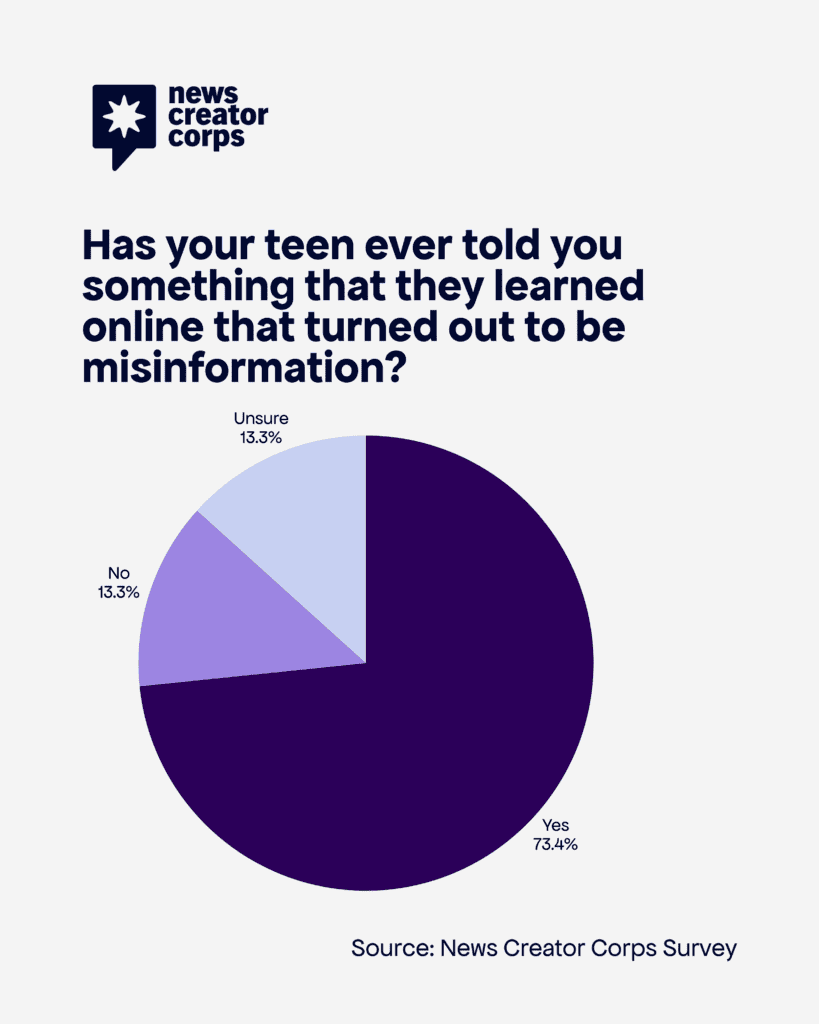
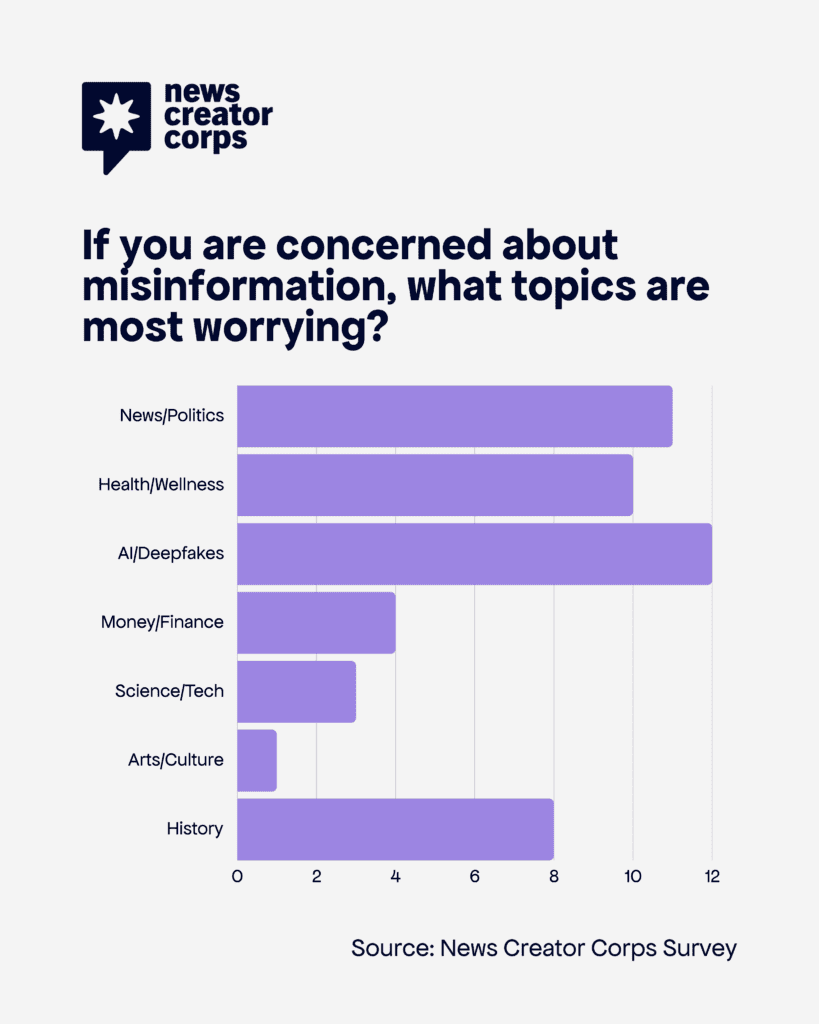
Of the 73% of respondents whose teens had repeated misinformation, most reported politics and current events as the topic of those falsities. Beyond conspiracy theories and hoaxes, parents said their kids had shown them AI videos of protests that weren’t real; repeated misinformation about ICE arrests, elections, and Charlie Kirk; and even parroted antisemitic misinformation they’d seen online. Parents reported being most concerned about misinformation presented by AI and deepfakes (80 percent named this as a concern), followed by news and politics misinformation (73 percent) and health and wellness misinformation (67 percent).
While parents reported feeling somewhat to very equipped to spot misinformation and to determine an information source’s credibility, all but two respondents have less faith in their teens. Forty percent said their teen is somewhat able to spot misinformation, while 33 percent said their teen is not very able.
But, this lack of faith isn’t for lack of trying. Nearly all parents said they have talked about misinformation and how to spot it with their teens, and most said it’s a regular discussion in their household. One parent said they regularly press their kids about sources of online information, frequently asking “how do you know?” Another parent said they talk about rooting out misinformation “all the time.” Many respondents said they have used online resources to help educate themselves or their children on misinformation, most often citing Common Sense Media and the News Literacy Project as education aides they’ve used. And, these parents want more. Half of respondents said they’d be very likely to use specific new resources aimed at educating young people about misinformation, and 44 percent said they’re somewhat likely.
At News Creator Corps, we know the stakes that both teens and parents face when flooded with misinformation.
“The media diet and information gathering habits that teenagers develop influence the way they interact with news as an adult, and it’s so vital that they feel the importance of utilizing accurate and trustworthy information to make decisions and become civically engaged in their community,” says Rachel Lobdell, executive director of News Creator Corps.
So, we’re here to help. In the coming months, News Creator Corps will develop programming based off our learnings, designed to help parents and teens navigate our information ecosystem together. Want to get involved? Send us an email about your teen’s experience with misinformation. What kind are they encountering? Do they know how to spot it? Is there a tool they wish they had to help them navigate it all? We want to know so we can provide these key resources, all in service of creating smart, savvy citizens of the future.